

Most concerning is the long-term upward trends of CO₂ emissions form burning fossil fuels, which are far from trending towards net-zero by 2050.
CSIRO

As Australia’s national science agency, CSIRO is solving the greatest challenges through innovative science and technology.
CSIRO - unlocking a better future for everyone.
Links
Articles
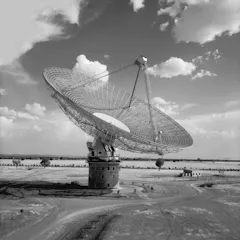
After six decades during which it tracked lunar missions, spotted distant pulsars and quasars, and even expanded our concept of the size of the Universe, the Parkes telescope is still going strong.
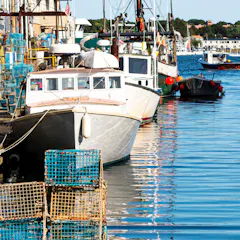
The indirect losses from one heatwave in Western Australia caused A$4.14 billion per year worth of damage.
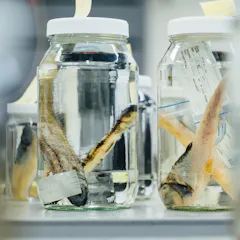
Recovering historical genetic data has been severely impeded by the methods used to preserve specimens, from dried butterfly wings to platypus bills floating in alcohol.
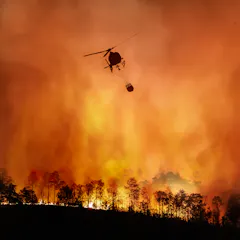
How scientists are improving their understanding of the connection between extremes and climate change – and what’s to come. Listen to The Conversation Weekly.

Litter hotspots were associated with socioeconomic factors such as a concentration of built infrastructure, less national wealth and the level of lighting at night.
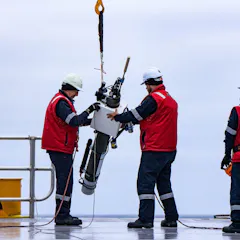
A new analysis, using 15 years of autonomous underwater measurements and simulations from the latest global climate models, refined our estimate of future ocean warming and sea level rise.
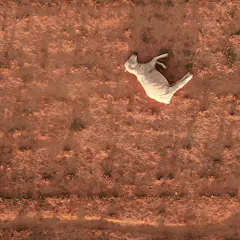
Australia may warm by 4°C or more this century, the IPCC has found. As these IPCC authors explain, there is no going back from some changes in the climate system.

IPCC authors go beyond the headlines to explain how 1.5°C warming is measured – and why there’s still reason to hope, and act, if Earth exceeds that limit.
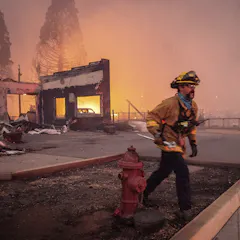
The Intergovernmental Panel on Climate Change has released its long-awaited report. From accelerating emissions to intensifying disasters to rising sea levels, its authors lay out the new findings.

234 scientists from 66 countries reviewed over 14,000 research papers. It was gruelling and it was worth it: the report is the most important global assessment of climate change science yet.
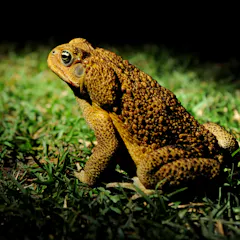
Without urgent action, Australia will continue to lose billions of dollars every year on invasive species.

More than ten offshore wind farms are currently proposed for Australia. If built, their combined capacity would be greater than all coal-fired power plants in the nation.

Astronomers have taken a close-up look at the jets of plasma streaking away from a supermassive black hole - one of the strangest and most energetic features of galaxies.

Determining the age of fish has been historically difficult, primarily involving lethal methods. A new DNA test solves this problem.

If problems in such schemes are not addressed, the credibility of soil carbon trading will be undermined. Ultimately the climate - and the planet - will be the loser.
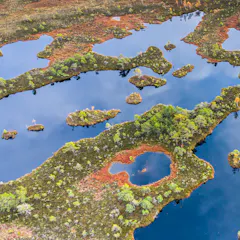
Peatlands worldwide are running short of water, and the amount of greenhouse gases this could set loose would be devastating for our efforts to curb climate change.

Just 5% of Australian businesses have collaborated with university researchers, and the smaller the company, the less likely collaboration.
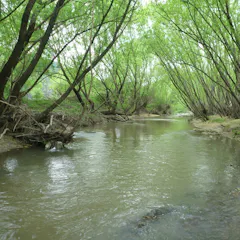
For temperature-sensitive animals, the dense, leafy canopy of willow trees may make them the lesser of two evils in a warming climate.

Habiendo más de dos mil millones de personas en el mundo que ya consumen insectos, ¿por qué no comemos más “langostinos terrestres”?
Authors
-

SKA-Low Commissioning Scientist, Square Kilometre Array Observatory; and Affiliate, Space and Astronomy, CSIRO
-
Chief Research Scientist - Environment, CSIRO
-
Research Lead, Carbon Dioxide Removal, CSIRO
-
Principal Research Scientist in Aquatic Ecology, CSIRO
-
Behavioural Scientist, CSIRO
-
Senior Research Scientist in Aquatic Ecology, CSIRO
-
Professor, Senior Principal Research Scientist, CSIRO
-
Postdoctoral Research Fellow, Marine Carbon Dioxide Removal, CSIRO
-
Radio Astronomy Research Scientist, CSIRO
-
Research Director, CSIRO
-
Senior Principal Research Scientist, Environment, CSIRO
-
Research scientist, CSIRO
-
Principal Research Scientist, CSIRO
-
Principal Research Scientist in Ecosystem Ecology, CSIRO
-
Senior Principal Research Scientist, CSIRO