

Growth in demand for healthy and sustainable products could make Australia’s food and agribusiness sector more valuable than mining.
CSIRO

As Australia’s national science agency, CSIRO is solving the greatest challenges through innovative science and technology.
CSIRO - unlocking a better future for everyone.
Links
Articles
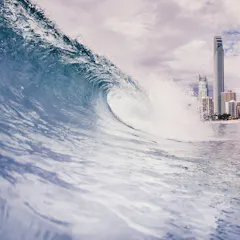
A warming climate will affect the way waves hit over 50% of the world’s coastlines, increasing erosion and the risk of flooding.

We don’t know enough about the carbon footprint of vegan foods, and that needs to change.

Corals, mangroves and seagrass habitats have been affected by extreme weather events, and some may never recover.
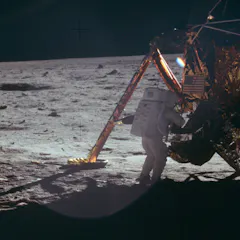
When Neil Armstrong stepped on to the Moon 50 years ago this month, Australians saw the images first. Australia even defied bad weather to bring the historic images to the world.
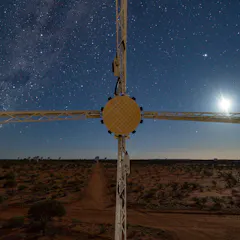
For the first time scientists have located the home galaxy of a one-off fast radio burst. Here’s how they did it – and what they learned about the galaxy.
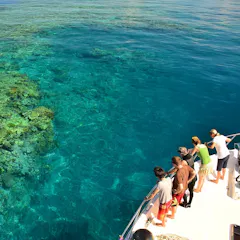
Severe coral bleaching may have been the crucial factor in bringing home the reality of climate change for many people.

Australia requires a minimum six-star energy rating for new housing. New homes average just 6.2 stars, so builders are doing the bare minimum to comply, even as the costs of this approach are rising.

If the right changes are made today, Australia’s living standards could be up to 36% higher in 2060. This translates into a 90% increase in average wages (in adjusted, real terms) from today.

Sydney’s affluent eastern suburbs have raw and untreated sewage from 3,500 people discharged directly into the Tasman Sea.
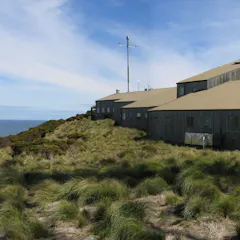
Carbon dioxide levels in the atmosphere are at 414 parts per million. But thanks to a recalculation of methane’s warming power, the total amount of greenhouse gases is now equivalent to more than 500.

Waves occur in all sorts of places, and it’s possible that waves you might see breaking at the beach are at the end of a very long journey.

For several years, emissions of CFCs have been rising, in apparent defiance of a global ban in place since 2010. A new global detective effort has traced the source to two eastern Chinese provinces.
Removing human-related methane from the atmosphere could reduce global warming by 15%.
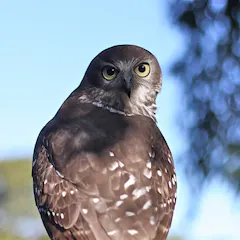
Invasive species are the biggest single threat to Australian plants and animals.

El Niño events can affect millions of people around the world, causing drought in Australia and floods in the Americas.

We are three professional women who all made different decisions regarding name changes.

Artificial intelligence has the potential to transform the way we live, work, communicate and travel. So long as it’s designed that way.

When it comes to giant pandas, politics, economics and international diplomacy often eclipse conservation considerations.

A plant-growth-regulating spray might be the solution for vineyards affected by heatwaves.
Authors
-

SKA-Low Commissioning Scientist, Square Kilometre Array Observatory; and Affiliate, Space and Astronomy, CSIRO
-
Chief Research Scientist - Environment, CSIRO
-
Research Lead, Carbon Dioxide Removal, CSIRO
-
Principal Research Scientist in Aquatic Ecology, CSIRO
-
Behavioural Scientist, CSIRO
-
Professor, Senior Principal Research Scientist, CSIRO
-
Molecular Virologist, CSIRO
-
Postdoctoral Research Fellow, Marine Carbon Dioxide Removal, CSIRO
-
Senior Research Scientist, Team Leader Rabbit Biocontrol, CSIRO
-
Radio Astronomy Research Scientist, CSIRO
-
Research Director, CSIRO
-
Research scientist, CSIRO
-
Principal Research Scientist, CSIRO
-
Principal Research Scientist in Ecosystem Ecology, CSIRO
-
Senior Principal Research Scientist, CSIRO