

Manusia pertama yang sampai ke Australia mungkin menavigasi lautan unuk menyeberang hingga barat laut pesisir benua tersebut lebih dari 50.000 tahun lalu.
CSIRO

As Australia’s national science agency, CSIRO is solving the greatest challenges through innovative science and technology.
CSIRO - unlocking a better future for everyone.
Links
Articles

How you prepare your coffee at home (and wash up the mugs) can have a big impact on its carbon footprint. So fill that kettle carefully, and only brew what you know you’ll drink.

What will Antarctica look like in 2070? Will the icy wilderness we know today survive, or will it succumb to climate change and human pressure? Our choices over the coming decade will seal its fate.

Imagine if we could specify our general privacy preferences in our devices, have them check privacy policies when we sign up for apps, and warn us if the agreements overstep.

A design process that focuses on adaptation and intelligence is essential to building robots that can handle the challenges of outdoor environments.
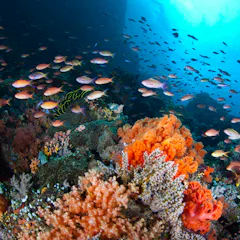
Marine heatwaves have had little attention until recently, but they’re already having large effects.

The first people to make it to Australia could have navigated their way by sea crossing, reaching the north-west coastline of the island continent more than 50,000 years ago.

Simulation models show just how effectively fake news and propaganda can shift opinions.

The “sniff test” doesn’t work every time, and other food safety tips.
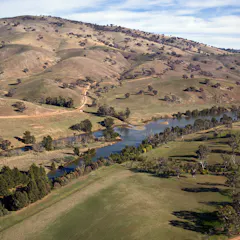
The Murray-Darling Basin Plan has been politically fraught and mired in scandal. But environmental monitoring suggests that the health of the rivers is indeed improving – even if it will take decades.
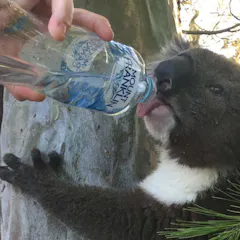
An annual assessment of the health of Australia’s environment shows mostly stable conditions in 2017, but ecosystems on land and at sea suffered ever higher temperatures.

Sensors that monitor everything a self-driving vehicle does can help determine who is responsible in the case of an accident – the manufacturer, the service centre or the vehicle owner.

Stephen Hawking inspired people with his work on black holes and other mysteries of the universe. Many were quick to pay tribute to the theoretical physicist who died today in the UK, aged 76.

Flies need good grip because they often sleep upside down.

Human eyes don’t have x-ray vision. But we can use radiography machines to allow our eyes to see inside things the human eye cannot.
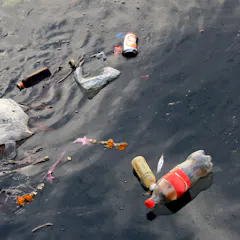
Drink containers end up in the ocean at a truly alarming rate. Simply paying people a small amount to return them cuts that rate by nearly half.

A surprising study published in Science found that as fuel emissions drop, consumer products are playing a larger role in air pollution.
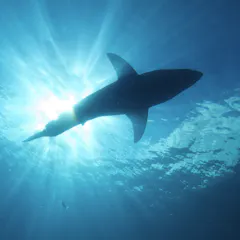
New research has used genetic analysis in a world-first effort to accurately estimate Australian and New Zealand white shark numbers.
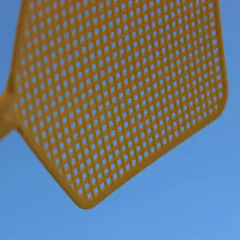
Why are flies so easily able to evade our attempts to swat them?

Upcoming innovations suggest that 2018 might be the year when the promise of augmented reality begins to be realised.
Authors
-

SKA-Low Commissioning Scientist, Square Kilometre Array Observatory; and Affiliate, Space and Astronomy, CSIRO
-
Chief Research Scientist - Environment, CSIRO
-
Research Lead, Carbon Dioxide Removal, CSIRO
-
Principal Research Scientist in Aquatic Ecology, CSIRO
-
Behavioural Scientist, CSIRO
-
Professor, Senior Principal Research Scientist, CSIRO
-
Molecular Virologist, CSIRO
-
Postdoctoral Research Fellow, Marine Carbon Dioxide Removal, CSIRO
-
Senior Research Scientist, Team Leader Rabbit Biocontrol, CSIRO
-
Radio Astronomy Research Scientist, CSIRO
-
Research Director, CSIRO
-
Research scientist, CSIRO
-
Principal Research Scientist, CSIRO
-
Principal Research Scientist in Ecosystem Ecology, CSIRO
-
Senior Principal Research Scientist, CSIRO