

Many jobs are likely to disappear due to technology and automation, but many more are likely to be created. The greatest challenge is managing the transition.
CSIRO

As Australia’s national science agency, CSIRO is solving the greatest challenges through innovative science and technology.
CSIRO - unlocking a better future for everyone.
Links
Articles
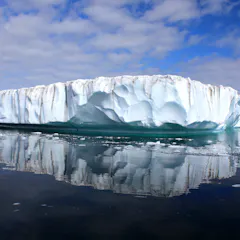
The Paris agreement has given us some solid targets to aim for in terms of limiting global warming. But that in turn begs a whole range of new scientific questions.

Tasmania’s bushfires have hurt not only the state’s forests, but also the honey industry that depends on access to the region’s unique trees.
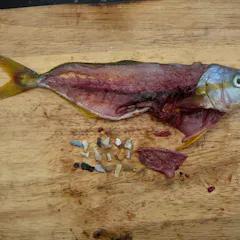
Dave West from the environmental group Boomerang Alliance told Fairfax that if you’ve got an average seafood diet in Australia, you’re probably ingesting about 11,000 plastic pieces a year. Is that right?
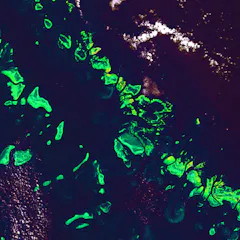
Ocean acidification will hurt some parts of the Great Barrier Reef more than others.
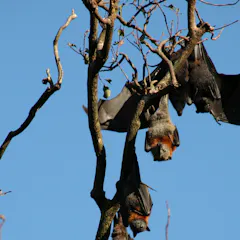
Bats can carry some of the deadliest diseases known to affect humans and yet they don’t seem to get sick. So what can we learn from a bat’s immune system?

If we can solve the privacy issues, placing trackers on people and the things we make can teach us a great deal about ourselves and the world around us.

Intelligent machines are taking on many of the jobs once carried out by humans but that doesn’t mean we’ll have mass unemployment.
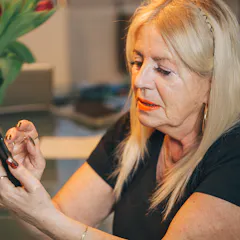
Researchers at CSIRO and University of Queensland have developed an app called Harlie that is designed to chat with humans.

Homebuyers want energy-efficient homes. The challenge is to present the relevant information in a way that taps into the typical house-hunter’s mindset.
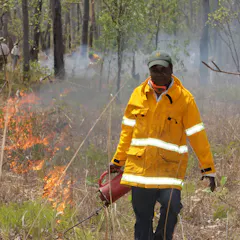
Every year homes are lost in bushfires. But what if we build our houses to withstand fire?
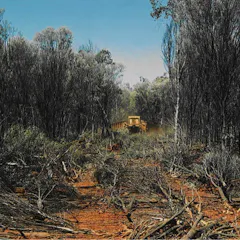
We’re going to have to adapt to climate change, but some of the options on the table could do more harm than good if they destroy the ecosystems that protect us.
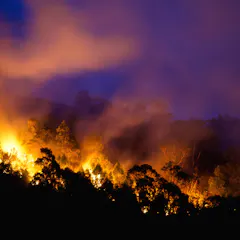
New data analysis shows bushfires have increased by 40% in the past five years.
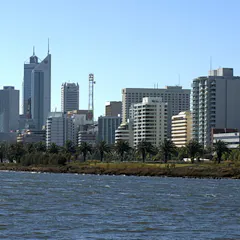
Constant, complex changes in cities and mine sites are hard to monitor. Drawing on digital aerial photography, it’s now possible to track land-use and vegetation changes in areas as small as 10-20cm.

The Great Barrier Reef might get all the attention, but what about our western coral reefs? Warmer waters and human impacts mean these reefs are in trouble.
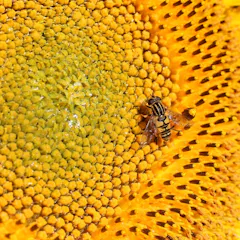
Next time you reach for the honey, spare a thought for the other vital insects that pollinate our crops.
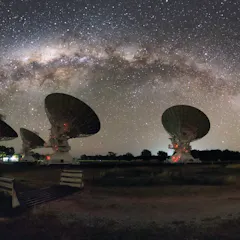
Astronomers think they may have found evidence within our galaxy of some of the missing matter thought to make up our universe.
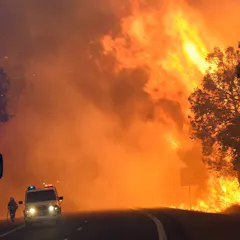
2015 was the world’s hottest year ever by a long shot. But what drove the record temperatures, and what role did climate change play?
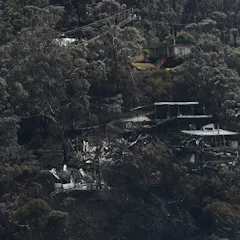
The Christmas Day fires that struck the Victorian town of Wye River are an example of how to get emergency responses right.
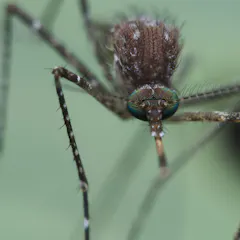
There’s something about mosquitoes that means they don’t get sick from the infections they carry. So can we turn that function off, genetically?
Authors
-

SKA-Low Commissioning Scientist, Square Kilometre Array Observatory; and Affiliate, Space and Astronomy, CSIRO
-
Chief Research Scientist - Environment, CSIRO
-
Research Lead, Carbon Dioxide Removal, CSIRO
-
Principal Research Scientist in Aquatic Ecology, CSIRO
-
Behavioural Scientist, CSIRO
-
Professor, Senior Principal Research Scientist, CSIRO
-
Molecular Virologist, CSIRO
-
Postdoctoral Research Fellow, Marine Carbon Dioxide Removal, CSIRO
-
Senior Research Scientist, Team Leader Rabbit Biocontrol, CSIRO
-
Radio Astronomy Research Scientist, CSIRO
-
Research Director, CSIRO
-
Research scientist, CSIRO
-
Principal Research Scientist, CSIRO
-
Principal Research Scientist in Ecosystem Ecology, CSIRO
-
Senior Principal Research Scientist, CSIRO