
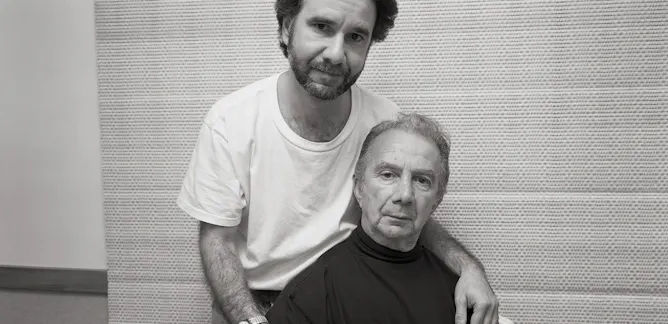
What does an artist do when the subject is a disease as much as a person, and when the disease then subsumes the person – to the point where he can’t recognize his own son?
Clark University

Founded in 1887, Clark University is a liberal arts-based research university that prepares its students to meet tomorrow’s most daunting challenges and embrace its greatest opportunities. Through 33 undergraduate majors, nearly 30 advanced degree programs and nationally recognized community partnerships, Clark fuses rigorous scholarship with authentic world and workplace experiences that empower our learning community to pursue lives and careers of meaning and consequence. Clark’s academic departments and institutes develop solutions to complex global problems across the disciplines, and the university addresses the behavioral health of adolescents and young adults through the Mosakowski Institute for Public Enterprise.
Links
Articles

Experts recommend adopted children be told about their origins, no matter how difficult the circumstances, but doing so is tricky for adoptive parents.
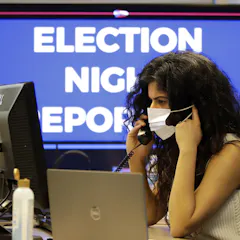
To many, the idea that states might cancel or postpone their primary elections as a response to the COVID-19 epidemic sounds undemocratic. What’s the political effect of these postponements?

Fantasy fiction provides more than escapism for young readers.

A psychologist specializing in parenting offers tips to help children self-motivate while at home during the coronavirus crisis.

National emergencies allow for the purest expressions of sovereign power, testing the government’s commitment to human rights. Some leaders are failing the coronavirus test, experts say.
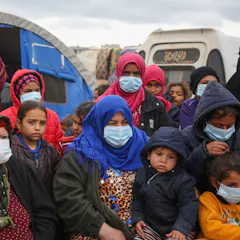
Everyone in Syria is fighting a slightly different war from everyone else, there are outsiders with their own goals – and the coronavirus is about to make everything much worse.
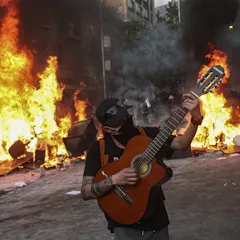
To quell weeks of protest over extreme inequality, Chile’s president has agreed to rewrite the country’s constitution, passed in 1980 under the deadly military regime of Augusto Pinochet.
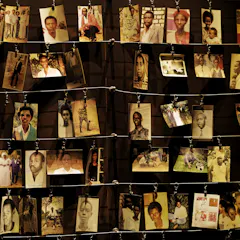
Learning from what actually worked during the United Nations’ infamously ineffective 1994 peacekeeping mission in Rwanda may save lives in the future.
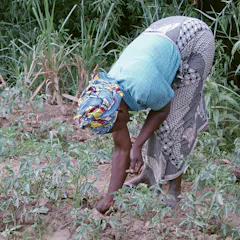
Civil society organisations in Zambia help women get access to land.

The genocide memory in Rwanda is diverse and dynamic.

The movement against globalisation has shifted from developing to developed countries.

This primary cycle, few incumbents in the House and Senate are fighting off extremist challengers. Is that because the top of the ticket is taking up all the air?
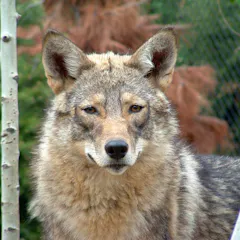
A wildlife biologist argues that the canid in eastern North America – known as the eastern coyote, or the coywolf by some – deserves to be classified as a separate species.
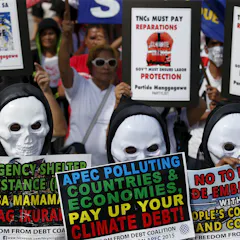
A narrow debate of what countries should pay to respond to climate change obscures a bigger moral discussion that touches on economics, ethics and people’s relationship to the natural world.
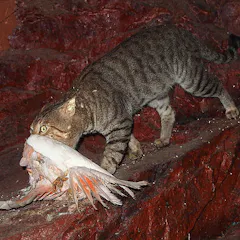
Australia wants to kill off two million feral cats and momentum for similar plans is growing in the US. Is there a good case for killing or neutering outdoor cats to protect biodiversity?
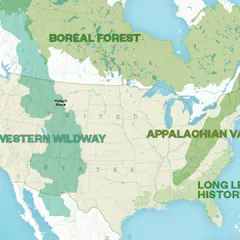
L’idée du « rewilding » portée par Edward O. WIlson invite à repenser le rapport de l’homme à la nature.
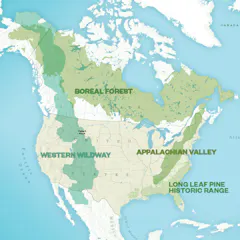
Proposals to set aside vast tracts of land for wildlife raise ethical questions, challenging the human-centric view of the value of life.
Authors
-

Professor of Psychology, Clark University
-
Postdoc, mycologist and evolutionary biologist, Clark University
-
Professor of International Development, Community, and Environment, Clark University
-
Professor of English, Clark University
-
Visiting Assistant Professor of English, Clark University
-
Assistant Professor of Economics, Clark University
-
Professor and Director, International Development, Community, and Environment, Clark University
-
Professor of Philosophy, Uskudar University; Visiting Professor, Clark University
-
Professor of Geography, Clark University
-
Associate Professor of Political Science, Clark University
-
Associate Professor of Political Science, Clark University
-
Professor of Practice in Education, Clark University
-
Professor of Political Science, Clark University; Institute for Humane Studies
-
Henry J. Leir Chair in Language, Literature and Culture, Clark University
-
Professor of Political Science, Clark University