

The Uffizi Gallery in Florence has threatened legal action against Pornhub for use of its art in pornographic work.
City St George's, University of London

City St George’s, University of London is the University of business, practice and the professions. City St George’s attracts around 27,000 students from more than 150 countries. Our academic range is broadly-based with world-leading strengths in business; law; health and medical sciences; mathematics; computer science; engineering; social sciences; and the arts including journalism, dance and music.
In August 2024, City, University of London merged with St George’s, University of London creating a powerful multi-faculty institution. The combined university is now one of the largest suppliers of the health workforce in the capital, as well as one of the largest higher education destinations for London students. City St George’s campuses are spread across London in Clerkenwell, Moorgate and Tooting, where we share a clinical environment with a major London teaching hospital. Our students are at the heart of everything that we do, and we are committed to supporting them to go out and get good jobs.
Our research is impactful, engaged and at the frontier of practice. In the last REF (2021) 86 per cent of City research was rated as ‘world-leading’ 4* (40%) and ‘internationally excellent’ 3* (46%). St George’s was ranked joint 8th in the country for research impact with 100% of impact cases judged as ‘world-leading’ or ‘internationally excellent’. As City St George’s we will seize the opportunity to carry out interdisciplinary research which will have positive impact on the world around us.
Links
Articles

Proposals to toughen the Official Secrets Act are the latest in a long history of efforts designed to prevent government embarrassment.

El té rooibos es el primer producto africano que recibe la designación de protección de la
Unión Europea. ¿Qué significa esto para la región donde se cultiva?

The negative cycle of sexual harassment is entrenched because not much is done about it when it is reported in newsrooms.

A new Russian law forces French champagne producers to label their products as ‘sparkling wine’.

A democratic approach to skills, expertise and responsibility have raised England’s game.

The new flagship policy of the leading opposition party has been tried before, and it’s not compatible with the new UK free tradde agreements.

When a crisis like COVID-19 disrupts expectations for the future, it also disrupts how health messaging works. Advertising research shows three ways that health campaigns can succeed in a crisis.

Converting food waste to animal feed – or reducing it altogether by supermarkets working with farmers – could save millions of tonnes of food from being discarded. It could also help raise animal welfare standards.

Rooibos tea is the first African product to receive EU protected designation. What does this mean for the region where it’s grown?

Mainland China is tightening the screws on press freedom in Hong Kong.

Being unable to communicate their thoughts and feelings is one reason almost two-thirds of people with aphasia suffer from depression.
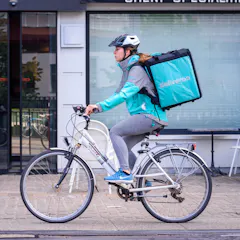
Is there a place for speedy grocery delivery startups in a post-COVID world? That depends on consumer habit.

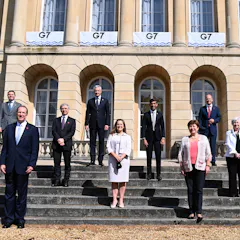
After the acrimony of the Trump years, we can expect a very different feel to the latest G7 summit.
To weigh the prospects of a transformation, it pays to look at the markets.
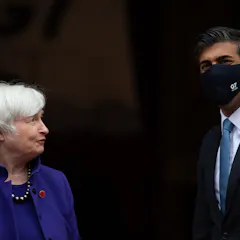
UK will come under pressure to bring about change in its overseas territories, but only up to a point.

The two countries both stand to benefit from closer economic ties.

Fans and critics loved him then hated him and now they love him again.

Waiver talks might convince companies to focus on technology transfer and training, and let go of the plan to maximise patent-based revenues.

Trump will not be returning to Facebook or Instagram before November 2021.
Authors
-

Professor of Management, City St George's, University of London
-
Lecturer in English Literature and Publishing, City St George's, University of London
-
Honorary Research Fellow, Department of International Politics, City St George's, University of London
-
Executive Dean, City St George's, University of London
-
Professor of Sociology, City St George's, University of London
-
Reader in English, City St George's, University of London
-
Professor in International Politics, City St George's, University of London
-
Research Fellow at the Centre for Food Policy, City St George's, University of London
-
Senior Lecturer in International Politics, City St George's, University of London
-
Lecturer in Psychology, City St George's, University of London
-
Senior Lecturer in Mathematics, Department of Mathematical Sciences, City St George's, University of London
-
Director, European Social Survey, City St George's, University of London
-
Research Fellow, Centre for Food Policy, City St George's, University of London
-
Honorary Research Fellow, City Political Economy Research Centre, City St George's, University of London
-
Lecturer in Digital Media Sociology., City St George's, University of London