

By tracing the location of millions of devices, Google has mapped the pandemic response at a scale never seen before.
City St George's, University of London

City St George’s, University of London is the University of business, practice and the professions. City St George’s attracts around 27,000 students from more than 150 countries. Our academic range is broadly-based with world-leading strengths in business; law; health and medical sciences; mathematics; computer science; engineering; social sciences; and the arts including journalism, dance and music.
In August 2024, City, University of London merged with St George’s, University of London creating a powerful multi-faculty institution. The combined university is now one of the largest suppliers of the health workforce in the capital, as well as one of the largest higher education destinations for London students. City St George’s campuses are spread across London in Clerkenwell, Moorgate and Tooting, where we share a clinical environment with a major London teaching hospital. Our students are at the heart of everything that we do, and we are committed to supporting them to go out and get good jobs.
Our research is impactful, engaged and at the frontier of practice. In the last REF (2021) 86 per cent of City research was rated as ‘world-leading’ 4* (40%) and ‘internationally excellent’ 3* (46%). St George’s was ranked joint 8th in the country for research impact with 100% of impact cases judged as ‘world-leading’ or ‘internationally excellent’. As City St George’s we will seize the opportunity to carry out interdisciplinary research which will have positive impact on the world around us.
Links
Articles
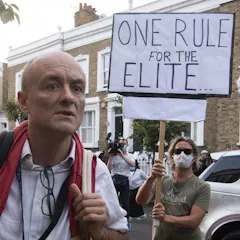
Power itself is not a threat to our freedom. But arbitrary power is.

With half the global workforce facing job loss, massive stimulus packages are needed to revive emerging economies and reduce mass unemployment, poverty and starvation.

Do people at the top think there is one rule for them and one rule for others? Bluntly, yes, they do.
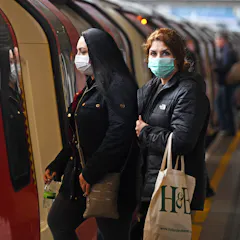
Data privacy is a major concern but people seem willing to download the app.

Public service journalism is more vital now than ever and should be given charitable status.

The core egalitarian principle of the NHS could be under threat in the wake of the COVID-19 pandemic.

Lots of research shows why video calls are mentally and emotionally taxing.

The UK must look now to a package of long-term measures that includes investment in industry and public services, increased unemployment benefits and universal basic income.

Some EU countries have said they won’t help companies based in tax havens – but that doesn’t include the EU’s own tax havens.
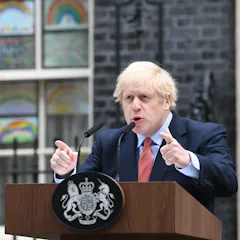
Charisma can only get you so far in the face of a global pandemic. Research on leadership suggests another approach is needed.

The government is focusing on the market to feed the UK but to avoid long-term risks and short-term emergencies a UK food plan is needed now
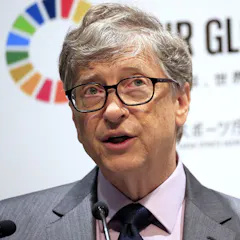
Generosity is good, but philanthropy can come at a significant social cost.
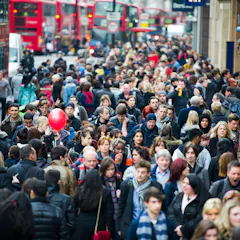
If the government seeks to reduce its massive deficit by cutting public spending after the pandemic subsides, this will burden the poor and public sector workers, increasing inequality.

Pakistan is using technology to distribute emergency support as part of its coronavirus stimulus. But its criteria for eligibility must be more nuanced.

Drug companies normally use patents to protect new treatments.

Tax rates may be the same for big and small companies, but five charts show how things work out differently in practice.

The current pandemic could be the undoing of globalisation if countries fail to cooperate and choose isolationism over a common purpose.
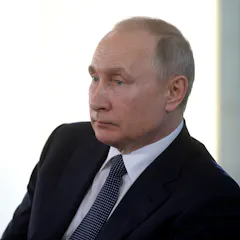
Putin’s rule has defined what political power means in post-Soviet Russia, with important consequences for the rest of the world.
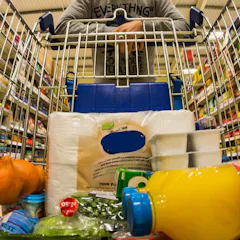
With people panic buying and supermarket shelves empty, the country’s ability to feed itself is being tested.
Authors
-

Professor of Management, City St George's, University of London
-
Lecturer in English Literature and Publishing, City St George's, University of London
-
Honorary Research Fellow, Department of International Politics, City St George's, University of London
-
Executive Dean, City St George's, University of London
-
Professor of Sociology, City St George's, University of London
-
Reader in English, City St George's, University of London
-
Professor in International Politics, City St George's, University of London
-
Research Fellow at the Centre for Food Policy, City St George's, University of London
-
Senior Lecturer in International Politics, City St George's, University of London
-
Lecturer in Psychology, City St George's, University of London
-
Senior Lecturer in Mathematics, Department of Mathematical Sciences, City St George's, University of London
-
Director, European Social Survey, City St George's, University of London
-
Research Fellow, Centre for Food Policy, City St George's, University of London
-
Honorary Research Fellow, City Political Economy Research Centre, City St George's, University of London
-
Lecturer in Digital Media Sociology., City St George's, University of London