

The UN resolution references a credible pathway to Palestinian self-determination and statehood.
City St George's, University of London

City St George’s, University of London is the University of business, practice and the professions. City St George’s attracts around 27,000 students from more than 150 countries. Our academic range is broadly-based with world-leading strengths in business; law; health and medical sciences; mathematics; computer science; engineering; social sciences; and the arts including journalism, dance and music.
In August 2024, City, University of London merged with St George’s, University of London creating a powerful multi-faculty institution. The combined university is now one of the largest suppliers of the health workforce in the capital, as well as one of the largest higher education destinations for London students. City St George’s campuses are spread across London in Clerkenwell, Moorgate and Tooting, where we share a clinical environment with a major London teaching hospital. Our students are at the heart of everything that we do, and we are committed to supporting them to go out and get good jobs.
Our research is impactful, engaged and at the frontier of practice. In the last REF (2021) 86 per cent of City research was rated as ‘world-leading’ 4* (40%) and ‘internationally excellent’ 3* (46%). St George’s was ranked joint 8th in the country for research impact with 100% of impact cases judged as ‘world-leading’ or ‘internationally excellent’. As City St George’s we will seize the opportunity to carry out interdisciplinary research which will have positive impact on the world around us.
Links
Articles

The public perceives serious ongoing problems in journalistic practice.
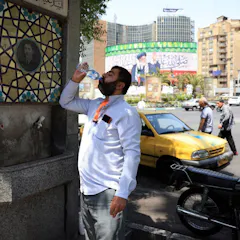
Iran is suffering huge water shortages. Expert believe there are changes that could help.

The vote revealed the depth of Iraq’s political fatigue and the power of dependency politics.
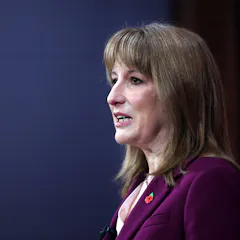
The mood music has been set – and it’s gloomy.

With no single dominant power waiting to take over from the US, the impacts of the next financial crisis could have catastrophic impacts around the world.
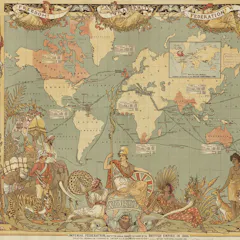
In each era of globalisation since the mid-17th century, a single country has sought to be the clear world leader – shaping the rules of the global economy for all.
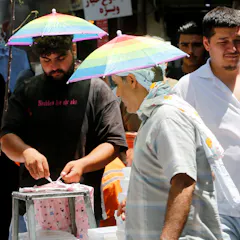
Tehran is facing its worst water shortages for ten years, but there is little reporting on it outside Iran.

New technology could leave few places for submarines to hide.

Family names provide continuity that other political structures in south-east Asia often cannot.

The data on antisemitic attacks is patchy but nevertheless revealing.

The Palestinian activist, jailed more than 20 years ago, tops the polls as Palestinians’ preferred leader.

Punishing groups of people as a reprisal for the actions of some is prohibited under international law.

School leavers and reservists are refusing military service. But this is unlikely to stop the assault on Gaza anytime soon.

Despite high suicide risk, most teens can identify reasons to live, from family bonds to small future dreams – offering hope for prevention.
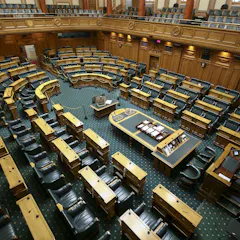
A single, overarching, publicly-approved written constitution could allay fears of giving governments longer terms. But NZ tends to shy away from such bold reform.

Mutual mistrust is hindering progress towards an end to the Ukraine war.
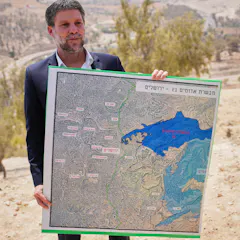
The proposed development would effectively cut the West Bank in two.
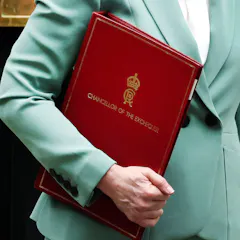
How can the chancellor raise the most money – at the lowest political cost?

Maths allows people to be immensely expressive in their scientific and artistic ideas.
Authors
-

Professor of Management, City St George's, University of London
-
Lecturer in English Literature and Publishing, City St George's, University of London
-
Honorary Research Fellow, Department of International Politics, City St George's, University of London
-
Executive Dean, City St George's, University of London
-
Professor of Sociology, City St George's, University of London
-
Reader in English, City St George's, University of London
-
Professor in International Politics, City St George's, University of London
-
Research Fellow at the Centre for Food Policy, City St George's, University of London
-
Senior Lecturer in International Politics, City St George's, University of London
-
Lecturer in Psychology, City St George's, University of London
-
Senior Lecturer in Mathematics, Department of Mathematical Sciences, City St George's, University of London
-
Director, European Social Survey, City St George's, University of London
-
Research Fellow, Centre for Food Policy, City St George's, University of London
-
Honorary Research Fellow, City Political Economy Research Centre, City St George's, University of London
-
Lecturer in Digital Media Sociology., City St George's, University of London