

Now you see them, now you don’t: what’s behind the vanishing COO phenomenon?
City St George's, University of London

City St George’s, University of London is the University of business, practice and the professions. City St George’s attracts around 27,000 students from more than 150 countries. Our academic range is broadly-based with world-leading strengths in business; law; health and medical sciences; mathematics; computer science; engineering; social sciences; and the arts including journalism, dance and music.
In August 2024, City, University of London merged with St George’s, University of London creating a powerful multi-faculty institution. The combined university is now one of the largest suppliers of the health workforce in the capital, as well as one of the largest higher education destinations for London students. City St George’s campuses are spread across London in Clerkenwell, Moorgate and Tooting, where we share a clinical environment with a major London teaching hospital. Our students are at the heart of everything that we do, and we are committed to supporting them to go out and get good jobs.
Our research is impactful, engaged and at the frontier of practice. In the last REF (2021) 86 per cent of City research was rated as ‘world-leading’ 4* (40%) and ‘internationally excellent’ 3* (46%). St George’s was ranked joint 8th in the country for research impact with 100% of impact cases judged as ‘world-leading’ or ‘internationally excellent’. As City St George’s we will seize the opportunity to carry out interdisciplinary research which will have positive impact on the world around us.
Links
Articles
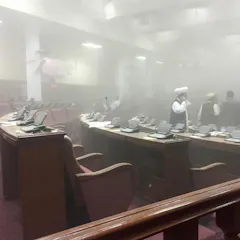
The Ghani administration had been crumbling for months before this attack on the Kabul parliament.

An EU court has ruled that Lego’s iconic mini-figures are a protected trademark and so cannot be copied. Here’s why.
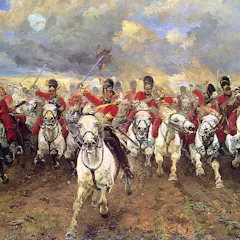
From Belgium to Moscow to Helmland: how one battle helped shape how we think of war.

The UK news giant’s ‘Newsroom 3.1’ strategy has been called the ‘death spiral of journalism’.

Only three of the original 63 clauses remain in force today, but the legacy of Magna Carta runs much deeper.
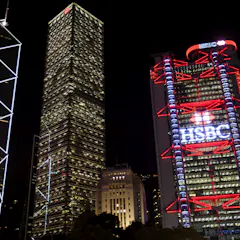
Is the business models which large banks have relied upon for the last three decades dead?
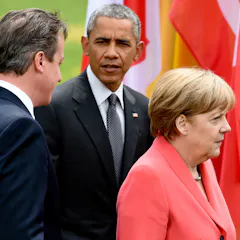
The Russian economy might be hurting, but the government’s social contract stands firm against a divided West.

An expert spent seven years studying the interactions between locals and immigrants: this is what he found.
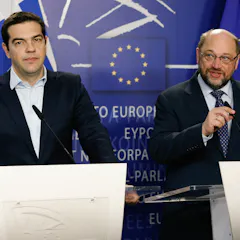
It’s not just Greece and poor economic performance that are threatening the future of Europe as we know it.

Getting rid of a morally tarnished leader is often the easiest part of cleaning up an organisation. The hard work begins now within FIFA.
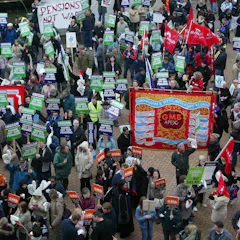
The threat of a strike can cause trepidation among the public - but where would we be without them?

Despite your genuine intentions, your friends or colleagues may not be as excited as you think to hear your good news.

Replacing authors on scientific papers with projects could be one way to tackle the increasing numbers of contributors.

The culture of foreign exchange market has changed significantly, but problems persist with the market that make it susceptible to further transgressions.

A previously obscure scholarly metric has became an item of heated public debate, thanks to Bjorn Lomborg. So what is an H-index and how is it calculated?
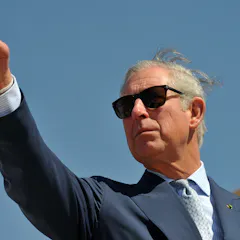
The Prince has views on defence procurement, badger culling and the Patagonian toothfish. Should we care?

The Conservative Party’s plans for an extra £8 billion annual health spending aren’t enough to halt a decline in quality care – never mind transform the NHS.
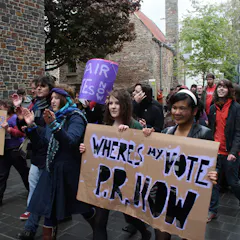
Why it is hard to escape the shortcomings of the first-past-the-post electoral process in the UK.
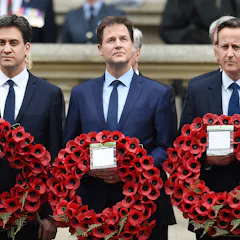
This was supposed to be the “social media election” but in the end it was those who moved beyond horse-race journalism, on whatever platform, who excelled.
Authors
-

Professor of Management, City St George's, University of London
-
Lecturer in English Literature and Publishing, City St George's, University of London
-
Honorary Research Fellow, Department of International Politics, City St George's, University of London
-
Executive Dean, City St George's, University of London
-
Professor of Sociology, City St George's, University of London
-
Reader in English, City St George's, University of London
-
Professor in International Politics, City St George's, University of London
-
Research Fellow at the Centre for Food Policy, City St George's, University of London
-
Senior Lecturer in International Politics, City St George's, University of London
-
Lecturer in Psychology, City St George's, University of London
-
Senior Lecturer in Mathematics, Department of Mathematical Sciences, City St George's, University of London
-
Director, European Social Survey, City St George's, University of London
-
Research Fellow, Centre for Food Policy, City St George's, University of London
-
Honorary Research Fellow, City Political Economy Research Centre, City St George's, University of London
-
Lecturer in Digital Media Sociology., City St George's, University of London