

En 2026, des modèles d’intelligence artificielle ont résolu des centaines de problèmes mathématiques ouverts, dont l’équation de Navier-Stokes. Plusieurs médaillés Fields redoutent qu’une production automatisée ne fragilise la recherche.
City St George's, University of London

City St George’s, University of London is the University of business, practice and the professions. City St George’s attracts around 27,000 students from more than 150 countries. Our academic range is broadly-based with world-leading strengths in business; law; health and medical sciences; mathematics; computer science; engineering; social sciences; and the arts including journalism, dance and music.
In August 2024, City, University of London merged with St George’s, University of London creating a powerful multi-faculty institution. The combined university is now one of the largest suppliers of the health workforce in the capital, as well as one of the largest higher education destinations for London students. City St George’s campuses are spread across London in Clerkenwell, Moorgate and Tooting, where we share a clinical environment with a major London teaching hospital. Our students are at the heart of everything that we do, and we are committed to supporting them to go out and get good jobs.
Our research is impactful, engaged and at the frontier of practice. In the last REF (2021) 86 per cent of City research was rated as ‘world-leading’ 4* (40%) and ‘internationally excellent’ 3* (46%). St George’s was ranked joint 8th in the country for research impact with 100% of impact cases judged as ‘world-leading’ or ‘internationally excellent’. As City St George’s we will seize the opportunity to carry out interdisciplinary research which will have positive impact on the world around us.
Links
Articles

Job listings will soon have to include salaries by law, but potential employees need more information to go on.

Getting back in the drivers’ seat is not always a straightforward move.

The field of mathematics is being disrupted by solutions to longstanding problems produced by AI models.

The film follows Clarissa (Sophie Okonedo) as she prepares to host a party and finds herself revisiting the choices that have shaped her life.
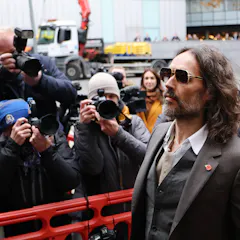
The women mentioned the effect of his media presence in their victim impact statements.
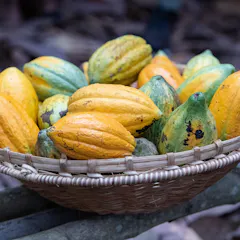
Le chocolat, les pommes de terre ou le pain pourraient coûter plus cher cet hiver. Météo erratique, El Niño et coût accru du carburant et des engrais pèsent sur les récoltes comme sur la production.

Reading between the lines, there are cuts coming for many government departments.
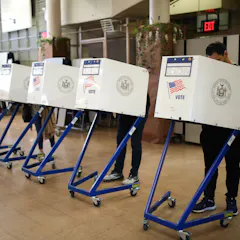
Voters say they care about the economy, but many blame Trump’s wars and tariffs for their bills.

The main candidates flatly reject Palestinian statehood.

Big decisions may have to wait.

The fear of the feminine has led the patriarchy to cast women as monstrous across time and culture.
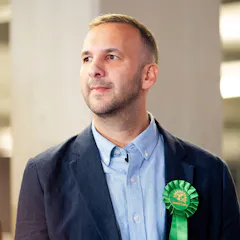
Polanski came under pressure from within his party and beyond it.
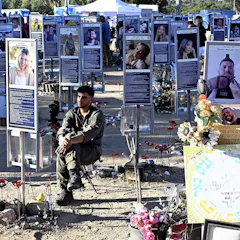
Accountability for the Hamas attacks and security are emerging as key issues in the election campaign.
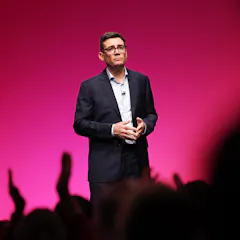
The prime minister wants fixing the crisis in social care to be the defining mission of his premiership.

US troops quitting Iraq leavesTehran a friendly neighbour and trading partner which can act as a pressure valve against international sanctions.
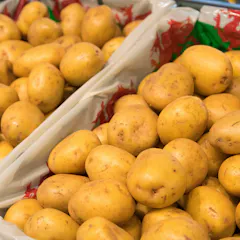
Conflicts, energy shocks, climate change and El Niño are combining to squeeze food prices upwards. Five familiar foods illustrate what’s going on.

The US-Israeli war against Iran appears to be entering a new cycle of escalation.
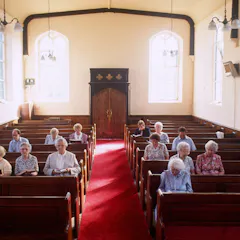
A look at how entertainment, culture and religion have changed since 2001.

We may soon know the answers to many long-standing mathematical problems.
Authors
-

Professor of International Relations, City St George's, University of London
-
Professor of Organisational Behaviour, Bayes Business School, City St George's, University of London
-
Lecturer in English Literature and Publishing, City St George's, University of London
-
Senior Lecturer in Foreign Policy and Security, City St George's, University of London
-
Honorary Research Fellow, Department of International Politics, City St George's, University of London
-
Executive Dean, City St George's, University of London
-
Professor in International Politics, City St George's, University of London
-
Professor of Organisational Psychology, City St George's, University of London
-
Research Fellow at the Centre for Food Policy, City St George's, University of London
-
Senior Lecturer in International Politics, City St George's, University of London
-
Lecturer in Journalism, City St George's, University of London
-
Senior Lecturer in Mathematics, Department of Mathematical Sciences, City St George's, University of London
-
PhD Candidate in English, City St George's, University of London
-
Research Fellow, Centre for Food Policy, City St George's, University of London
-
Honorary Research Fellow, City Political Economy Research Centre, City St George's, University of London