
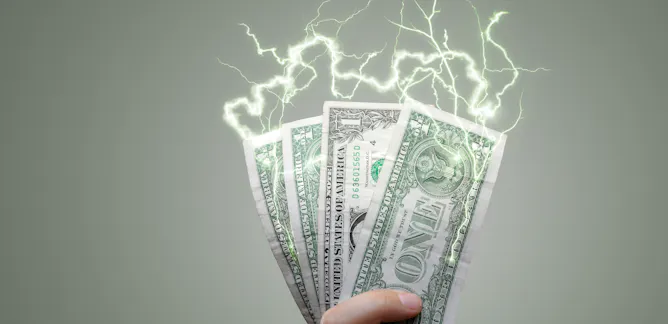
Helping households manage their electricity bills is different from making sure they can afford to use enough energy in their home to keep themselves safe.
Carnegie Mellon University

Carnegie Mellon University (CMU) is a global research university with more than 12,000 students, 95,000 alumni, and 5,000 faculty and staff. CMU has been a birthplace of innovation since its founding in 1900. Today, they are a global leader bringing groundbreaking ideas to market and creating successful startup businesses.
Their award-winning faculty members are renowned for working closely with students to solve major scientific, technological and societal challenges. CMU puts a strong emphasis on creating things—from art to robots.
CMU have campuses in Pittsburgh, Qatar and Silicon Valley, and degree-granting programs around the world, including Africa, Asia, Australia, Europe and Latin America.
Links
Articles
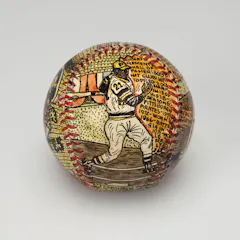
A Pittsburgh-born umpire turned folk artist spent decades inking players, stats and legendary moments onto baseballs, turning them into miniature monuments.
Both light and food provide signals your body listens to as it calibrates essential functions, including metabolism.

A boil-water advisory in Beaver County has residents and schools adjusting. Water researchers explain what E. coli in tap water means and how utilities make it safe.

Handing your heirs a list of passwords is only the first step in ensuring they can access and manage your digital affairs after you die.
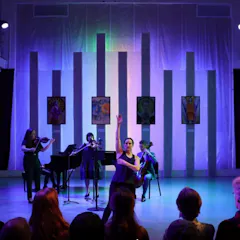
1 in 4 known pregnancies in the US ends in loss. A composer explains how those numbers, along with doctors’ expertise, became a 60-minute chamber work.

Kids have found ways around most of the safeguards meant to keep them off social media platforms.
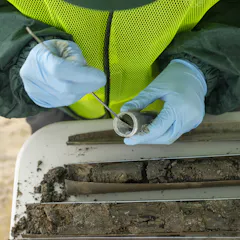
Dans les zones industrielles, certaines bactéries sont capables de se nourrir des polluants présents dans les sols. En étudiant leur ADN, des chercheurs explorent de nouvelles pistes pour améliorer la dépollution des sols.
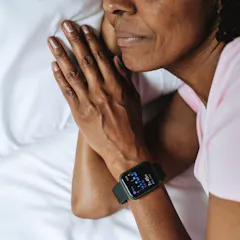
Can a sensor on your wrist really tell how your brain slept? Here’s what happens when sleep trackers go up against polysomnography, the clinical gold standard.

Pennsylvania’s Supreme Court says skill games are gambling. As lawmakers rush to tax them, a CMU scholar says the debate skips a more fundamental question.

Keeping aging coal plants open, building new gas plants and choices about pollution controls affect electricity bills. Pollution adds health costs and climate damage that may not appear on those bills.

Decades of pollution at Pittsburgh brownfields left bacteria that evolved to survive it – and maybe help clean up contaminated soil.
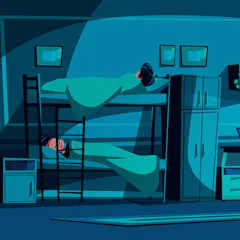
Universities and colleges won’t necessarily pay students to sleep. But they can offer other incentives that encourage them to close their eyes earlier.

TikTok’s lawsuit fits a pattern – from cigarettes to opioids – of courts stepping in where lawmakers won’t.
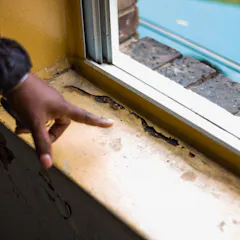
Public interest technology ensures that public policies are implemented in ways that change people’s lives.
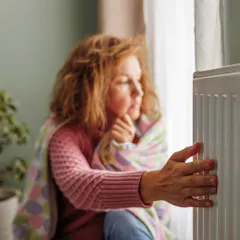
Energy is meant to improve people’s lives. Often cost prevents residents from making the most of that opportunity, so they cut back on energy use to be able to pay the bills.

Differences in beliefs may not be what drives people apart. A belief that someone else is wrong may be the stronger force.
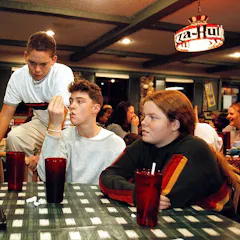
A Carnegie Mellon University marketing researcher explains why the love of a retro Pizza Hut has more to do with the relationships attached to it than pizza.
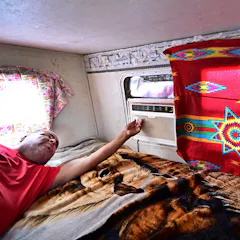
There is no single thermostat setting that is right for every person or every home. And there are other easy, low-cost steps that can help keep everyone comfortable when hot weather sets in.

Pennsylvania’s Supreme Court says skill games are gambling. As lawmakers rush to tax them, a CMU scholar says the debate skips a more fundamental question.
Authors
-

Associate Professor of Economics and Public Policy, Carnegie Mellon University
-
Professor of Digital Media and Marketing, Carnegie Mellon University
-
Assistant Professor of Biological Sciences, Carnegie Mellon University
-
Professor of History, Carnegie Mellon University
-
Alex Hills Career Development Associate Professor of Engineering and Public Policy, Civil and Environmental Engineering, Carnegie Mellon University
-
Professor of Psychology and Neuroscience, Carnegie Mellon University
-
Ph.D. Student in Societal Computing, Carnegie Mellon University
-
Professor of Public Policy, Carnegie Mellon University
-
Assistant Professor of Music, Carnegie Mellon University
-
Postdoctoral Scholar of Environmental Engineering, Carnegie Mellon University
-
Distinguished Career Professor of Machine Learning and Public Policy, Carnegie Mellon University
-
Assistant Professor of Civil and Environmental Engineering, Carnegie Mellon University
-
Professor of Social and Decision Sciences, Carnegie Mellon University
-
Ph.D. Student in Societal Computing, Carnegie Mellon University
-
Associate Professor of Biological Sciences, Carnegie Mellon University