

School principals don’t always offer much support for ongoing teacher development even though it’s compulsory.
Cape Peninsula University of Technology

The Cape Peninsula University of Technology is the only university of technology in the Western Cape of South Africa and is the largest University in the region. The University has six faculties focused on Applied Sciences, Business, Education and Social Sciences, Informatics and Design, Engineering and Health and Wellness Sciences. The University also plays a leading role in the provision of service-learning opportunities for its students.
The University offers more than 70 career-focused courses and has infrastructure that includes, apart from the two main campuses in Bellville and Cape Town, the Granger Bay Campus with a hotel school and restaurant next to the world-renowned V&A Waterfront in Cape Town as well as various campuses in Mowbray, Wellington, Athlone, Worcestor, George and the two major hospitals in the region.
The University’s research culture and history spans almost two decades and focuses on applied and problem solving research which is responsive to regional, national and continental needs. Since its establishment the institution is making excellent progress in strengthening its research capacity with the establishment of a number of research and innovation centers and also boasts a large number of rated researchers and research chairs. Like all other Universities of Technology in South Africa 2015 saw the celebration of a 10 year birthday milestone for the institution and we look forward to many more decades of innovation and groundbreaking firsts.
Links
Articles
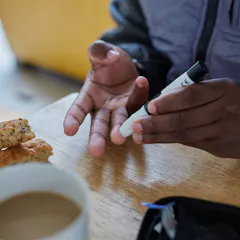
One of the biggest dangers of diabetes is that people can live with high glucose levels for many years without any symptoms.
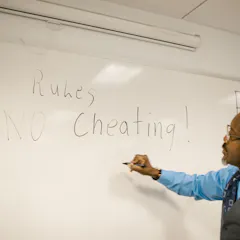
South Africa has clear rules for hiring teachers – but many educators believe other influences are stronger.
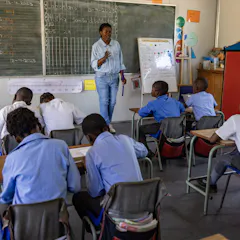
Teacher education must help future teachers connect what they learn at university with the real challenges they will face in classrooms.

Challenges old and new confront young people in their efforts to get a useful education.
Teachers should be able to work well in different contexts.
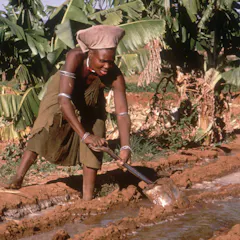
The G20 must collect ancient practices that can help the world withstand climate change so that this knowledge is available for future generations.

A new study compares the anti-inflammatory and barrier protective effects of unfermented and fermented rooibos extract on intestinal pig cells.

Teaching should encourage discovery, curiosity and problem solving. Why are teachers holding back?

South Africa plans to ban plastic microbead particles that wash into the ocean and end up in the fish we consume. The ban may take two years to come into effect.

School admission in South Africa continues to mirror entrenched societal inequities.

Why isn’t academic development working effectively enough in South African higher education?

The World Test Championship victory marked 10 successive test wins for South Africa. Here’s what’s going right.

Merokok mengubah keseimbangan bakteri di mulut yang dapat memicu peradangan dan efek berbahaya lainnya pada tubuh.
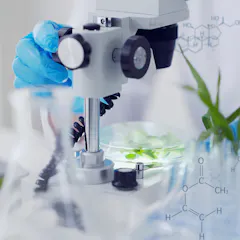
African governments must use the COP29 global climate change conference to make sure that artificial intelligence-driven advancements in agriculture and food production benefit all on the continent.

Changes to the bacterial balance in the mouth can trigger inflammation and other harmful effects in the body.
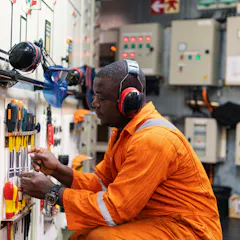
For those drawn both to engineering and a seafaring life, marine engineering and nautical science are ideal careers.

Sport tourism has significant economic potential in South Africa. Paris has shown how it can be maximised.

The first African team to reach a T20 World Cup final, South Africa will need to reconsider how young cricketers are playing the T20 game.
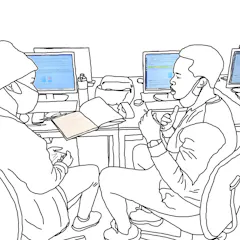
E-textbooks have potential to enhance inclusivity and engagement in engineering education.
Authors
-

Lecturer, Cape Peninsula University of Technology
-
Lecturer and Research Fellow: Department of Environmental and Occupational Studies in the Faculty of Applied Science, Cape Peninsula University of Technology
-
Teaching Practice Coordinator, Lecturer & Faculty of Education Transformation Chairperson , Cape Peninsula University of Technology
-
Acting Research Chair: Oceans Economy and Acting Director: Centre for Sustainable Oceans, Cape Peninsula University of Technology
-
Lecturer in Education & Professional Practice, Cape Peninsula University of Technology
-
Associate Professor, Cape Peninsula University of Technology
-
Lecturer in Education, Cape Peninsula University of Technology
-
Senior Researcher, Cape Peninsula University of Technology
-
Associate Professor, Cape Peninsula University of Technology
-
Researcher, Cape Peninsula University of Technology
-
Lecturer, Cape Peninsula University of Technology
-
Lecturer in Law in the Marketing Department in the Faculty of Business and Management Sciences, Cape Peninsula University of Technology
-
Senior research scientist, Cape Peninsula University of Technology
-
PhD in Biomedical Science (Microbiology), Cape Peninsula University of Technology
-
Associate professor, Cape Peninsula University of Technology