

Governments and international organizations should develop policy that incorporates remittances into how we respond to climate change.
Balsillie School of International Affairs

The Balsillie School of International Affairs (BSIA) is an institute for advanced research, education, and outreach in the fields of global governance and international public policy. As a hub in a global network of scholars, practitioners and students, our mission is to develop new solutions to humanity’s critical problems, to improve global governance now and in the future, and to contribute to enhancing the quality of people’s lives around the world.
Founded in 2007 by philanthropist Jim Balsillie, BSIA is an equal collaboration among the Centre for International Governance Innovation (CIGI), the University of Waterloo (UW), and Wilfrid Laurier University (Laurier). The collaborating institutions bring to BSIA different but complementary strengths, so they have different roles and responsibilities. The two universities employ BSIA faculty and offer BSIA’s academic programs, while CIGI, as a think tank, uses its in-house expertise and its worldwide network of practitioners to help inform and guide BSIA’s outreach and collaborative research. The BSIA is also the home to three research centres with an international profile - the Academic Council for the United Nations System (ACUNS), the International Migration Research Centre (IMRC) and the Centre for Sustainable Food Systems.
The unique integration of the collaborating institutions’ approaches and cultures gives BSIA an unmatched ability to promote vigorous engagement across boundaries of discipline and practice, to connect today’s experts with tomorrow’s leaders in critical debate and analysis, and to achieve—in all its work—the highest standards of excellence.
Links
Articles
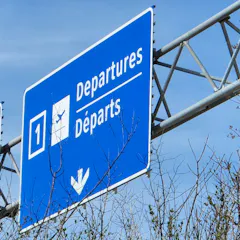
Roman Slepcsik’s plight shows how people become embedded in families, communities and workplaces in ways immigration categories alone cannot capture.

To protect our planet’s waters, we need to better understand these new economic and technological factors that underlie disputes over water.

Getting refugees to safety is essential, but helping them build a life while displacement continues should be just as important to Canadian policymakers.
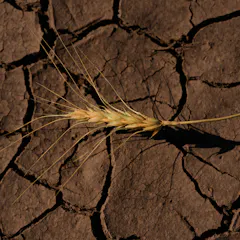
The modern food system was built on the expectation that geography would spread out the risks from droughts and floods. Climate change is testing all of that at once.
As governments push for stronger data rights like the “right to be forgotten,” evidence suggests AI may not fully comply, raising new regulatory challenges.

As Canada modernizes immigration administration, accountability must be deliberately built into digital systems.

With a hung parliament and uncertain election results, further political instability and a scramble to attain power is in full force in Pakistan.
Authors
-

Director and Professor, International Security, Wilfrid Laurier University, Balsillie School of International Affairs
-
Phd Student, Global Governance, Balsillie School of International Affairs
-
PhD Candidate in Global Governance, Balsillie School of International Affairs
-
PhD Candidate, Global Governance, Balsillie School of International Affairs
-
Postdoctoral Research Fellow, Remitting for Resilience (R2) project, Balsillie School of International Affairs