

Fewer children live with their biological fathers than with other men. These men should be recognised and given assistance to become social fathers.
Africa Health Research Institute (AHRI)

The Africa Health Research Institute’s vision is optimal health and well-being of under-resourced populations.
The Africa Health Research Institute (AHRI) is an independent, transdisciplinary scientific research institute based across two campuses in the province of KwaZulu-Natal (KZN) in South Africa.
AHRI’s research combines population, basic, social, and medical sciences to understand and intervene in the health and well-being of South African communities.
AHRI works in partnership with local communities and South African academic, governmental and other policy stakeholders. We emphasise training of the next generation of African scientists. AHRI collaborates with over 60 institutions globally.
The work lives of AHRI’s ~500 scientists, students and staff members are driven by our values: ubuntu, transformation, leadership, innovation, excellence and collaboration.
Links
Articles

Finding a cure for HIV is hard, because it locks into an individual’s DNA.
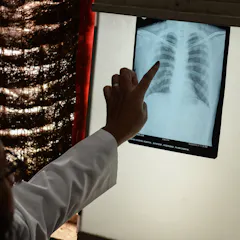
Progress against tuberculosis has long been inadequate to reach the target of elimination by 2030. But before the COVID-19 pandemic the world was making steady progress in diagnosing and treating TB.
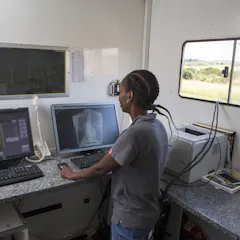
South Africa needs a public health response that expands the successes of the country’s HIV testing and treatment programme to provide care for multiple diseases.
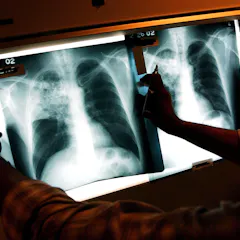
South Africa’s long-awaited TB prevalence survey results were recently released. They reveal that the country has a much higher burden of TB than previously thought.
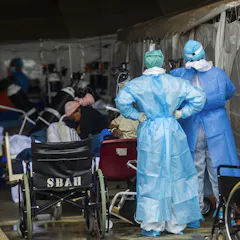
Los expertos han observado que la 501Y.V2 se ha convertido rápidamente en dominante entre el resto de variantes que circulan entre la población en Sudáfrica.
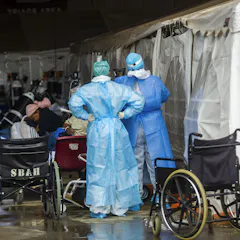
Scientists have observed that 501Y.V2 has quickly become “dominant” among multiple variants that have been circulating in the South African population.
Authors
-

Professor of International Health at LSHTM and Member of Faculty, Africa Health Research Institute (AHRI)
-
Assistant Professor, Africa Health Research Institute (AHRI)
-
Research fellow, clinical research at London School of Hygiene and Tropical Medicine, Africa Health Research Institute (AHRI)
-
Senior Research Associate, Africa Health Research Institute (AHRI)
-
Director for basic and translational science, Africa Health Research Institute (AHRI)
-
Director, Africa Health Research Institute (AHRI)
-
PhD candidate, Africa Health Research Institute (AHRI)