

Canadians looking for relief from the trade war launched by United States President Donald Trump are bound to be disappointed. The Trump administration has just announced it’s more than doubling Canadian softwood lumber duties, adding to an already punishing flurry of tariff actions.
These tariffs are designed to squeeze Canada, pressuring us into giving up our sovereignty. And while Trump may have cooled his annexation talk lately — likely because of how it was resurrecting the Liberal Party’s fortunes in the ongoing federal election campaign — we cannot simply pretend this threat has gone away.
Read more: Amid U.S. threats, Canada’s national security plans must include training in non-violent resistance
In response, Canada must use every tool at its disposal. It should leverage retaliatory tariffs and target trade action at vulnerable Republican districts if Trump targets Canada with more tariffs.
Canadian consumers need to continue boycotting American goods and Canada should ban American firms from bidding on public contracts. It also needs to revitalize trade and diplomatic relationships with reliable allies.
But alone, even these measures will be insufficient.
Public diplomacy like no other
To succeed, Canada needs the most ambitious and energetic campaign of public diplomacy in its history. The target of this campaign should not be the Trump administration, but the ultimate voice of authority in U.S. politics — the American public. Canadian diplomacy should aim to convince American citizens that the idea of annexing Canada, already unpopular, is a toxic betrayal of U.S. values.
Doing so, however, requires using the right language. Public diplomacy fails when it ignores the values of its audience, and especially when the audience has a strong emotional attachment to those values.
This means that just because something sounds righteous to Canadian ears doesn’t mean it resonates with Americans. Protecting Canadian sovereignty certainly sounds good to Canadians, but this concept is too abstract and distant from Americans’ everyday lives.
Likewise, Canadians are fiercely proud of our identity as “good neighbours,” but most Americans live far from us and do not know us. Nor can we invoke a shared history that the majority of Americans do not remember or have never learned.

The value of freedom
Instead, if Canadians are going to speak to Americans, then they must speak to their culture — and in U.S. culture, no value speaks more loudly than the value of freedom. As American historian Eric Foner writes: “No idea is more fundamental to Americans’ sense of themselves as individuals and as a nation than freedom.”
For American cognitive psychologist George Lakoff, most of contemporary U.S. politics can be read as a struggle over different conceptions of freedom. From the Declaration of Independence launching a newborn United States into a war for its freedom to the bravery of the Freedom Riders during the Civil Rights Movement, there is no other American value that has the broad resonance and emotion appeal of freedom.
If America has a civil religion, in fact, it is almost certainly a faith in freedom.
Canadians need to embrace this language and speak it relentlessly at every opportunity. Americans need to know that Canadians want the freedom to choose their leaders and their laws. They want the freedom to trade without the interference of tariffs. They want the freedom to choose who enters our country.
They want the freedom to speak different languages. The want the freedom to choose what is taught in Canadian schools, for women to choose, to criticize our government, to choose who we are and who we love. And if Canadians don’t have the freedom to say “no thank you” to becoming the 51st state, then they don’t really have any freedom at all.
Read more: Canada a 51st state? Here’s how American annexation could actually favour Canada
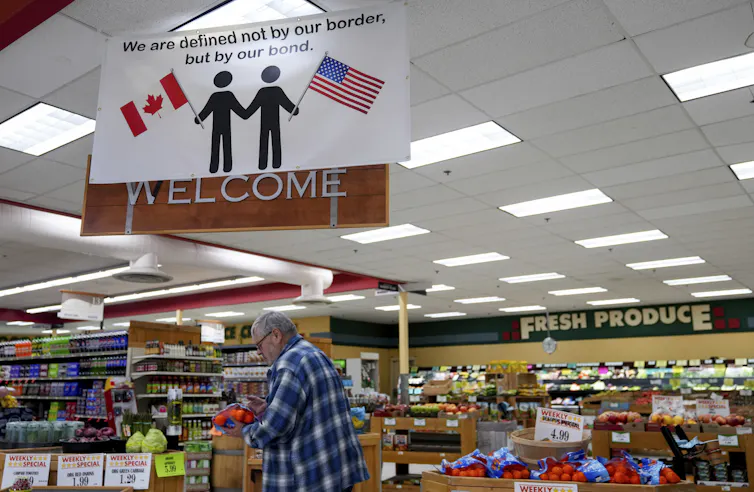
Putting Americans on the defensive
Embracing this language does more than simply signal shared values, it puts advocates of annexation on the defensive. By claiming the mantle of freedom, Canadians can put pro-annexation voices on the back foot by forcing them into defending an unpopular position.
Why should Canadians lose their freedom to elect their own leaders or make their own laws, lose their independence or bend the knee to an American president? Americans would never accept a similar choice.
Advocates of annexation, including members of the Trump administration, need to be relentlessly challenged over why they think Canadians should be deprived of their freedoms and forced to become American subjects.
The Trump administration has spent weeks suggesting Canadians have a stark choice: endure economic pain or submit to annexation. Fortunately, the American public knows that the choice between pain and submission is never a free choice, and that the denial of freedom is profoundly un-American.
Canada needs to tell American citizens that is exactly what their government is doing.